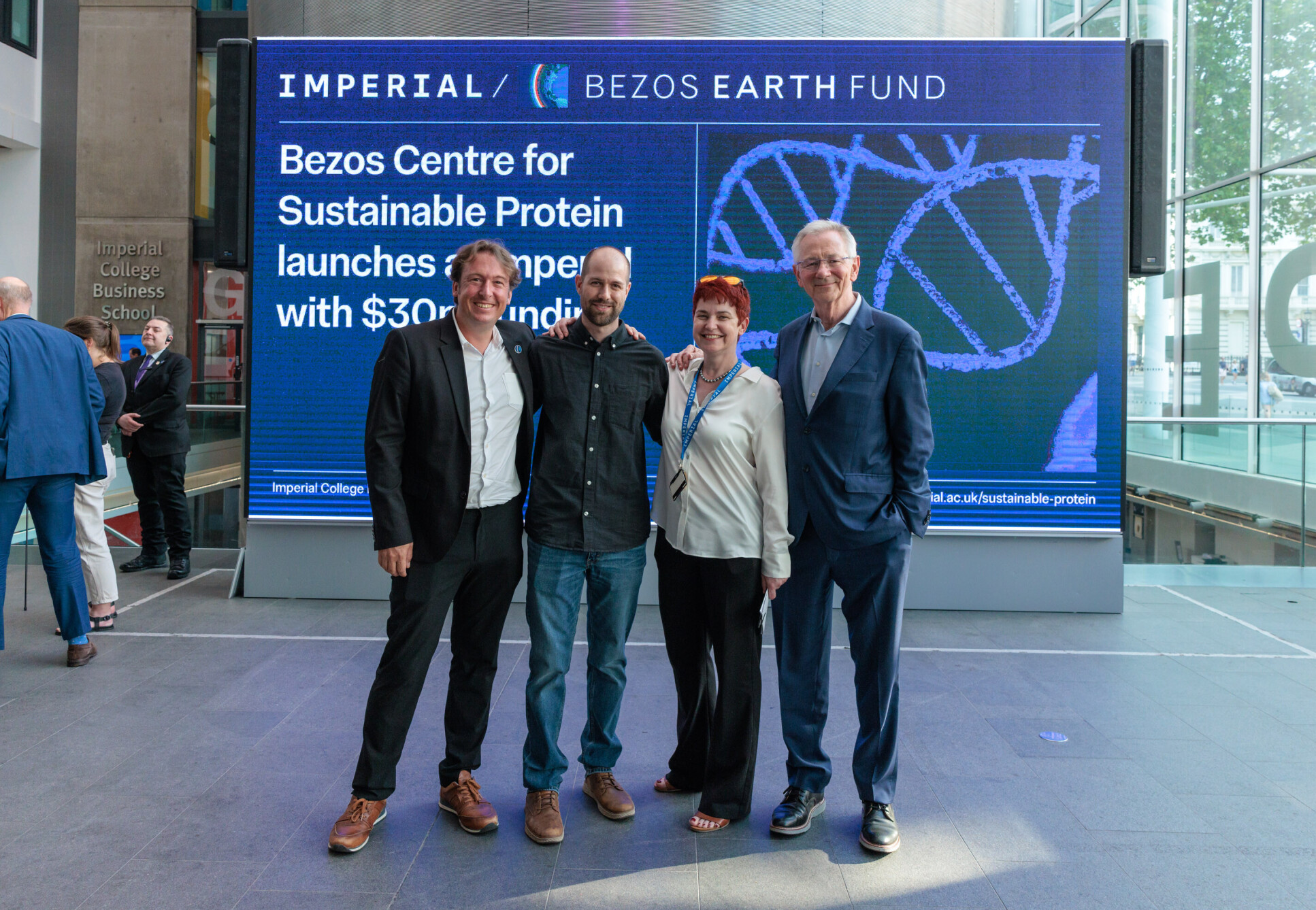
A new Centre at Imperial will address the critical global issue of our current unsustainable and environmentally damaging food ecosystems.
Imperial’s Bezos Centre for Sustainable Protein, launched today, will develop innovative and evidence-based solutions through the design, delivery, and commercialisation of alternative food products that are economically and environmentally friendly, nutritious, affordable, and tasty.
The Centre, spanning across seven Imperial academic departments, will advance research into precision fermentation, cultivated meat, bioprocessing and automation, nutrition, and AI and machine learning.
The Bezos Earth Fund is providing the funding as part of a $100 million commitment to developing sustainable protein alternatives and expanding consumer choice and an overall $1 billion commitment to food transformation. It’s one of multiple Earth Fund Centres working with other institutions and industry partners to develop and commercialise new alternative protein products to give consumers more choice for meat and dairy products.
Professor Hugh Brady, President of Imperial College London, said: “Food security is one of the biggest challenges facing humanity. For a sustainable future, we need to ensure that people across the world can be fed adequately and nutritiously with minimal impact on biodiversity, climate and our wider natural environment.
“Imperial has the leading-edge research, innovation, partnerships and convening power to advance global food systems and we are very excited by the potential of our new Bezos Centre for Sustainable Protein.”
Dr Andrew Steer, President and CEO of the Earth Fund said: “The Bezos Earth Fund is proud to support Imperial as the home of our second sustainable protein centre. By 2050 the world population will be over 10 billion, so now is the time to rethink the way we produce and consume food. This work will help ensure that our future includes more protein options – and that they taste great, are nutritious and come at low cost.”
[…]
Read the rest of the news story at Imperial College London.