The Challenge
Cultivated meat companies face a fundamental bottleneck: replicating the structure and marbling of real steak at industrial scale. While bioreactor-based tissue growth can form structured scaffolds, it remains low-yield and difficult to scale. Similarly, 3D printing offers precision but is slow, resolution-limited, and prone to nozzle clogging—hindering commercial feasibility.
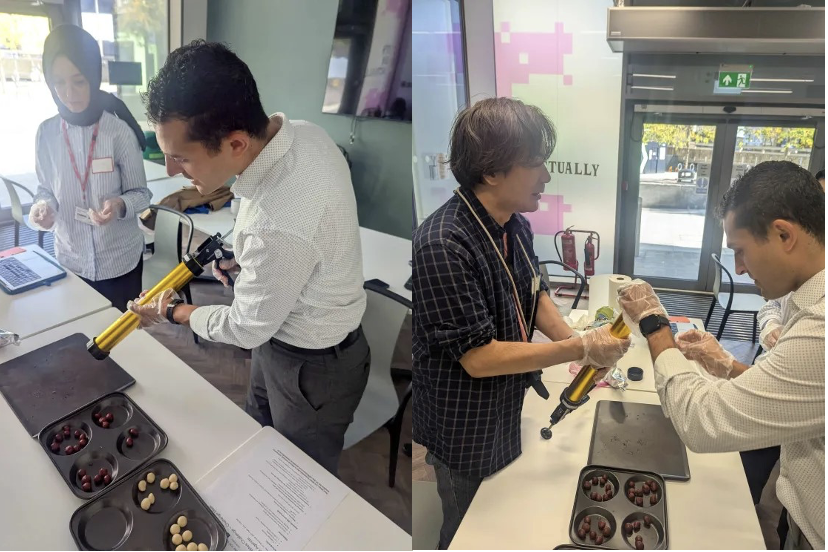
In contrast, extrusion is a proven and efficient structuring technique widely used for plant-based meat analogues, yet its potential for cultivated meat fabrication remains unexplored. The challenge invited teams to investigate whether extrusion-based structuring, combined with AI and image analysis, could reproduce steak-like marbling that meets sensory, structural, and economic benchmarks.
The Approach
The team combined AI-driven image analysis, computational flow modelling, and techno-economic assessment (TEA) to design a scalable, data-informed method for generating realistic marbling through extrusion. They used reference marbling datasets from USDA and Wagyu beef, alongside Space Steak prototype imagery, to train computer vision models for marbling classification.
In parallel, CAD and Finite Element Analysis (FEA) models simulated how extrusion parameters, such as flow configuration, shear rate, and temperature, affect fat–muscle patterning. The key innovation was an AI Marbling Grader Dashboard, which quantified marbling through a composite Marbling Index (MI) based on fat coverage, orientation dispersion, and lacunarity. A conceptual feedback loop then linked marbling metrics to extrusion control variables, enabling real-time optimisation of texture and structure.
The Outcome
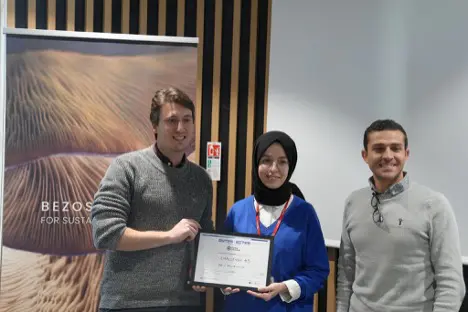
The team presented a cohesive vision for a digitally controlled, extrusion-based cultivated steak system. Their prototype demonstrated that marbling quality can be measured, benchmarked, and optimised, transforming what was once an artisanal process into a data- and AI-driven workflow.
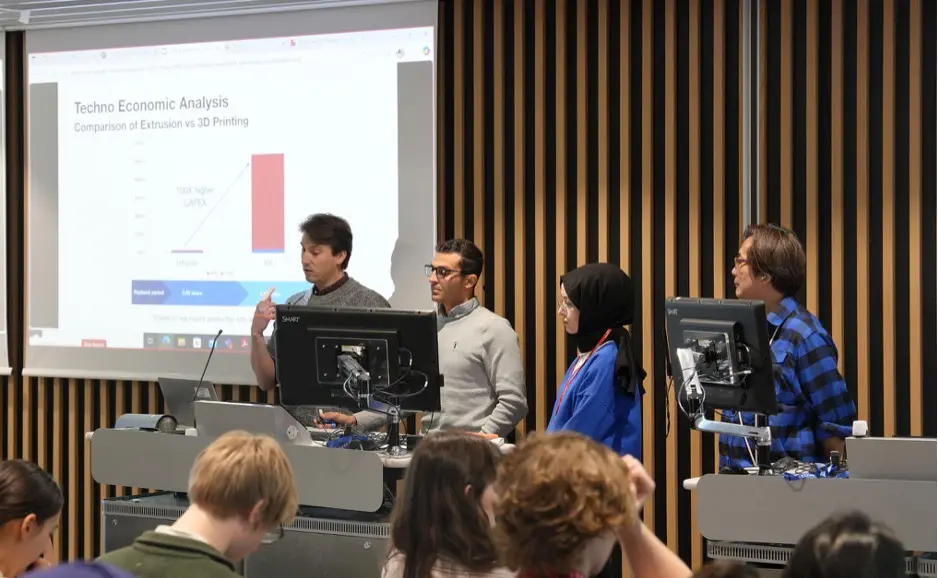
The AI Marbling Grader enabled quantitative comparison to conventional beef standards (e.g., USDA Prime, Wagyu), while the techno-economic analysis revealed extrusion’s clear industrial advantage: at equivalent output and pricing, extrusion offered an estimated payback period of 0.03 years, compared to 2.12 years for 3D printing. Together, these findings outline a new production paradigm for cultivated meat—one that merges mechanical engineering, computer vision, and AI to achieve scalable, realistic, and delicious steak analogues for the next generation of sustainable protein products.