The Challenge
Selecting the optimal microbial host for protein production is one of the most critical yet uncertain steps in sustainable protein development. Different hosts, such as E. coli, Saccharomyces, Pichia, or Bacillus, differ widely in yield, scalability, and processing cost, while offering distinct advantages in post-translational modifications and regulatory acceptance.
The challenge was to explore whether AI could assist in host selection, predicting which microbial “vehicle” would best express a given protein under realistic bioprocess constraints. A successful approach could reduce time, cost, and uncertainty, supporting faster development of food-grade recombinant proteins for sustainable production.
The Approach
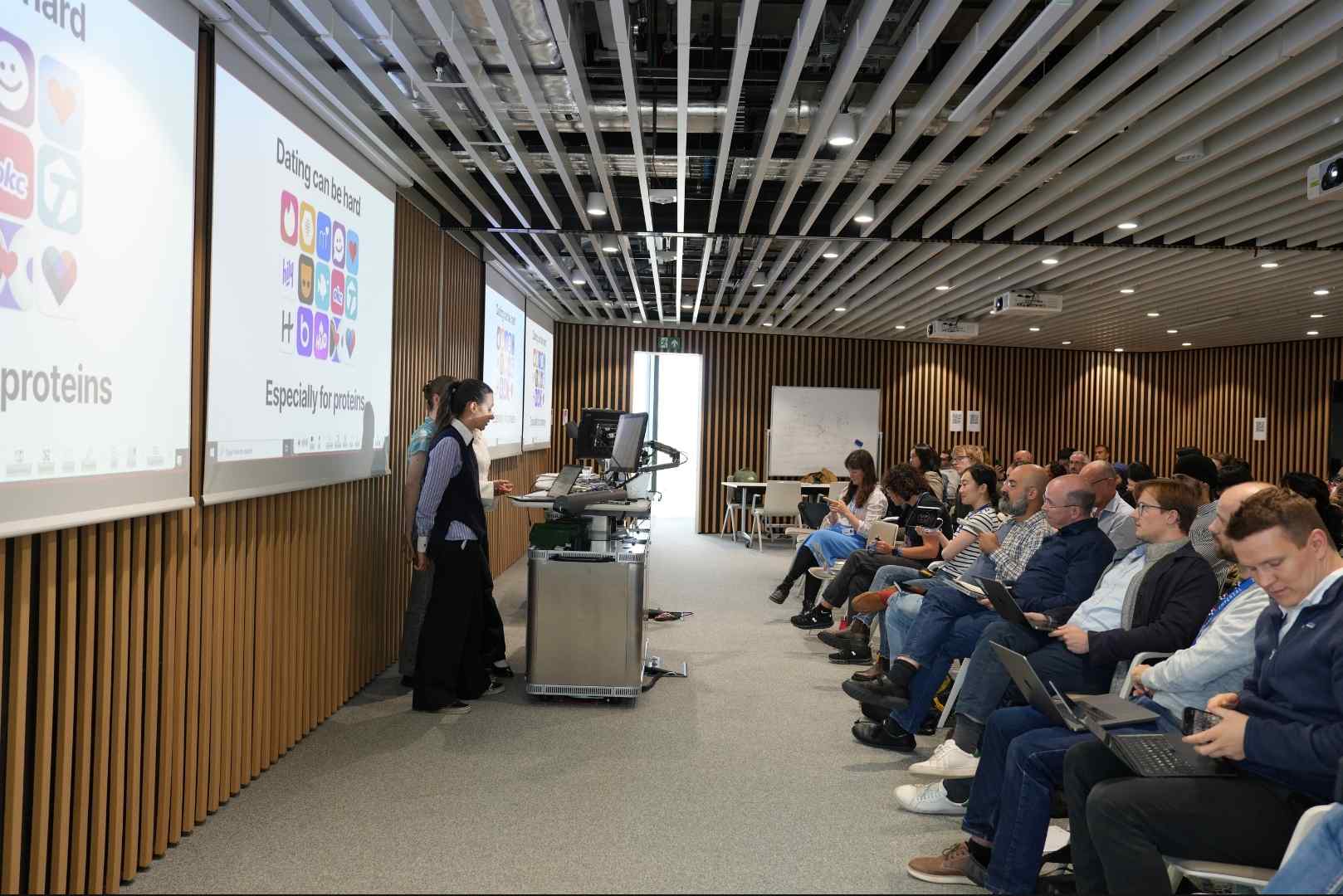
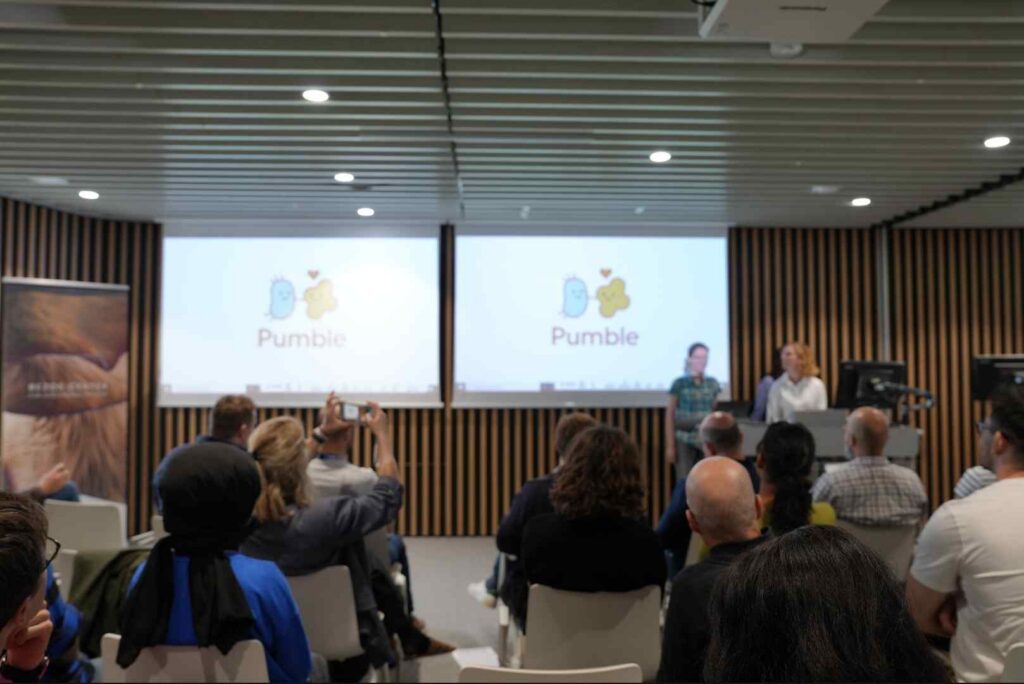
The team developed Pumble, a prototype protein–microbe matching platform that ranks potential host organisms for a target protein and process scenario. Integrating biochemical, bioengineering, and machine learning approaches, Pumble combines protein features from UniProt (such as solubility, aggregation, secretion signals, and folding complexity) with host metadata on growth kinetics, secretion pathways, and proteostasis capacity. It further incorporates experimental evidence from literature and patents reporting protein yields across hosts.
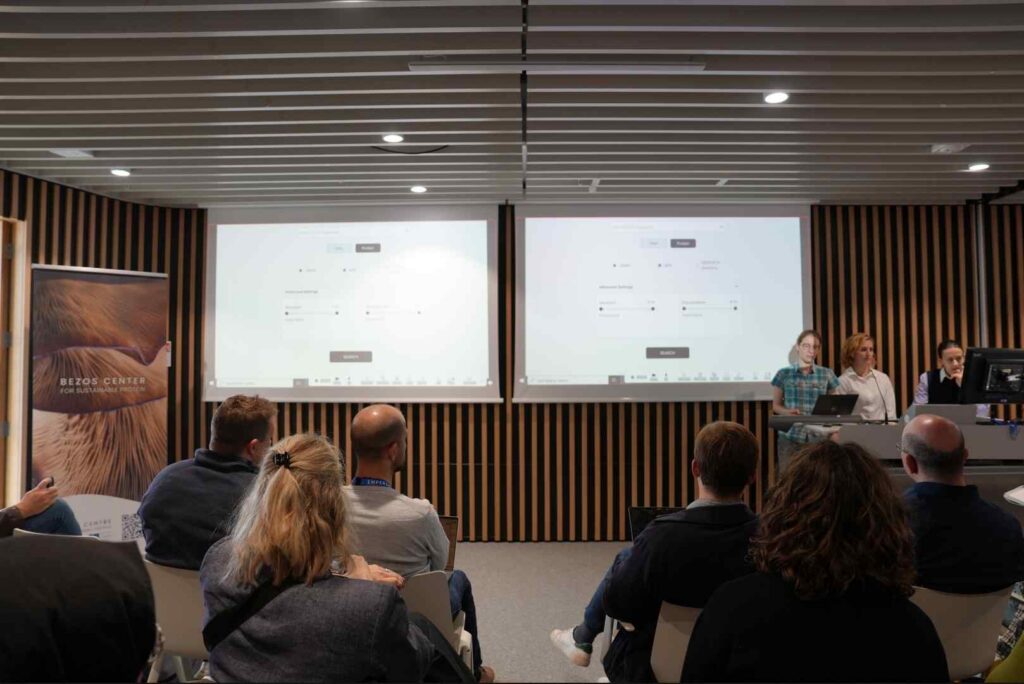
Using a gradient-boosted ranking model, the system predicts and explains host suitability through interpretable attributions, for example highlighting secretion potential in Pichia or refolding efficiency in E. coli. The model can also adjust to process-specific constraints, including food-grade status, media composition, and temperature range.
The Outcome
The resulting Pumble prototype demonstrated that AI-driven host selection is both feasible and informative. The platform produced evidence-backed recommendations consistent with known benchmark cases and highlighted key trade-offs between yield, glycosylation compatibility, and regulatory compliance.
By transforming host selection into a data-driven, interpretable process, Pumble enables researchers to make informed design decisions early in development, reducing experimental iterations and accelerating microbial protein production. This approach marks a step toward AI-assisted strain engineering and a more efficient biomanufacturing pipeline for sustainable food proteins.