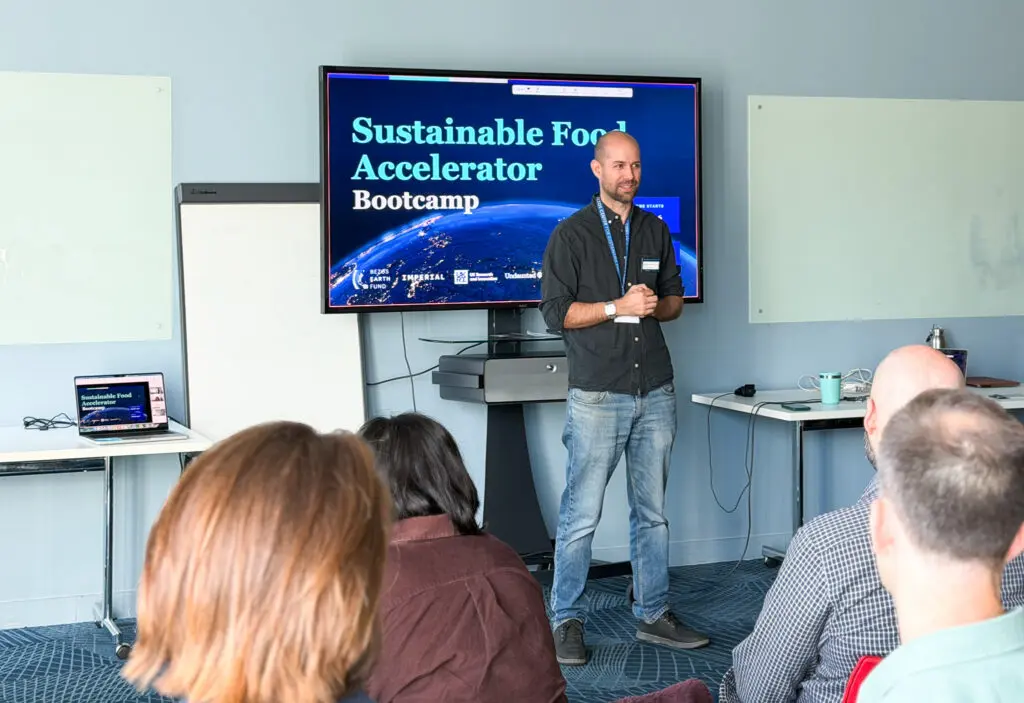
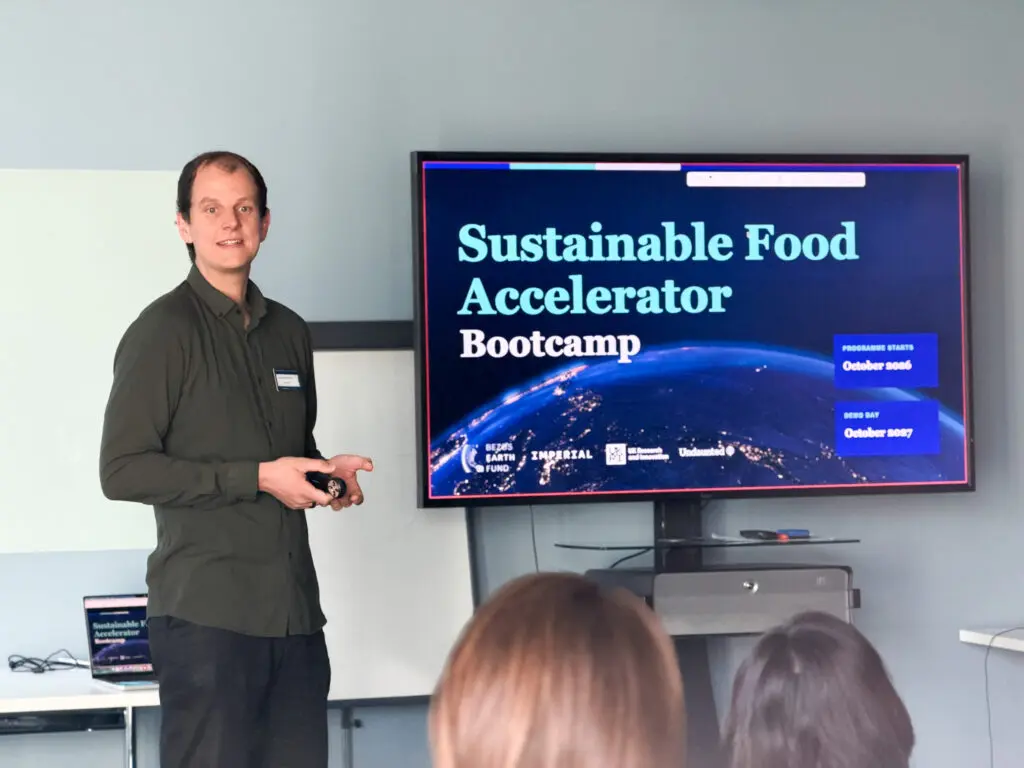
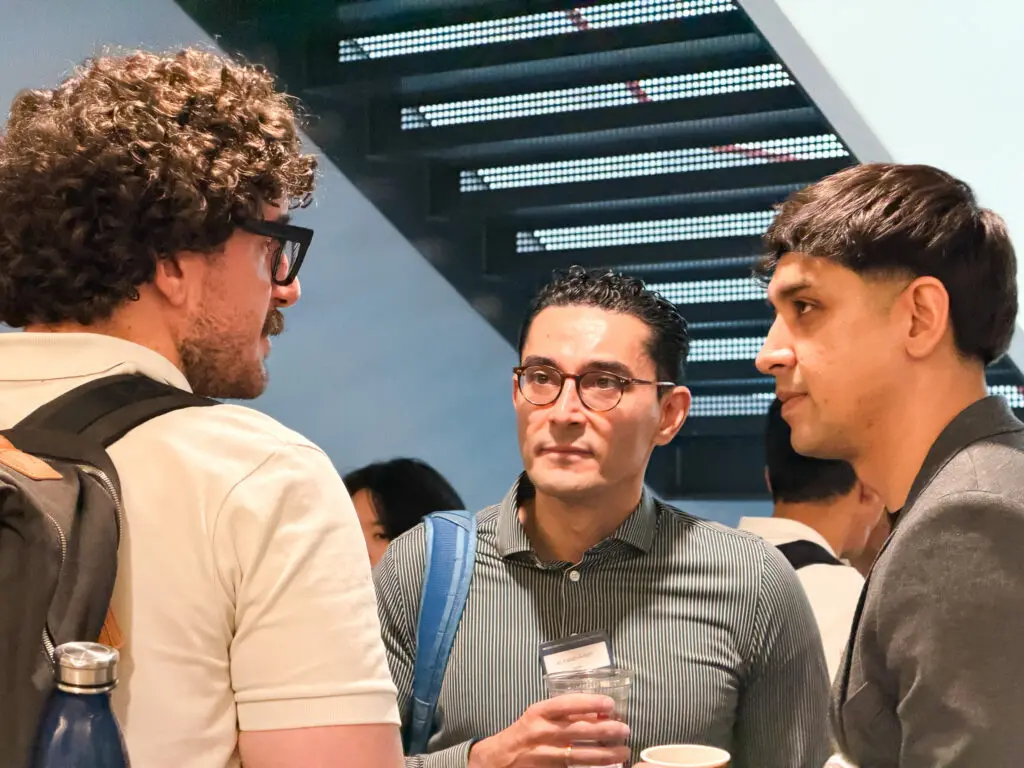
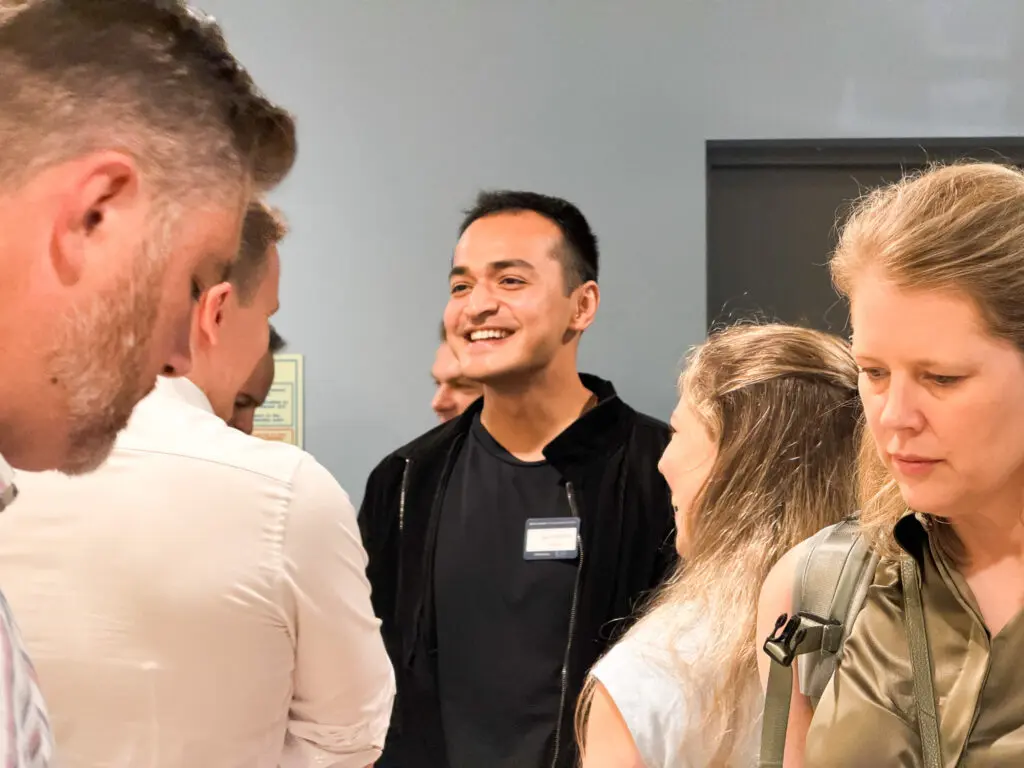
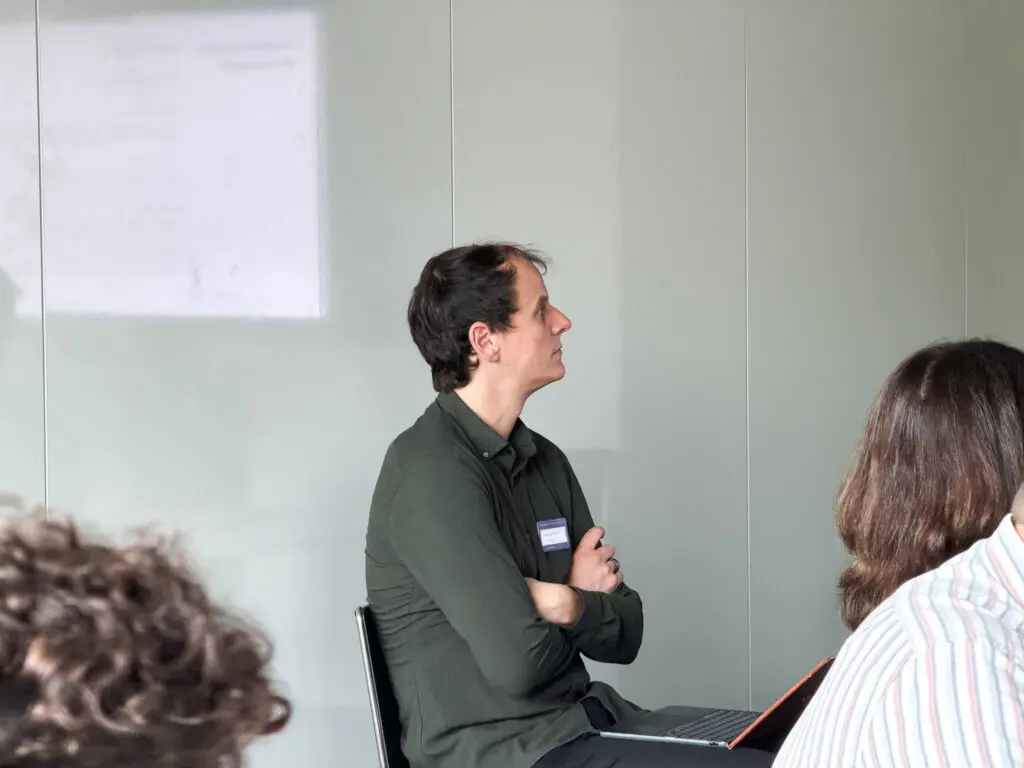
Thirty sustainable food startups have reached the next stage of the Sustainable Food Accelerator selection process, joining corporates, investors, industry experts and startup coaches for a two-day Selection Bootcamp at Imperial College London.
Delivered by the Bezos Centre for Sustainable Protein, Microbial Food Hub and Undaunted at Imperial, the Accelerator combines deep scientific and technical expertise with venture building, climate innovation, corporate engagement and investment support.
The Bootcamp took place on 22 and 23 September at I-HUB in Imperial’s White City Innovation District, bringing together 30 shortlisted founders working across sustainable ingredients, foodtech, biotechnology and next-generation food production.
Built around industry challenges, the 12-month, equity-free accelerator is designed to help high-potential ventures move from promising technology towards commercial validation, corporate pilots, investment and scale-up.
Putting founders and startup strategy under pressure
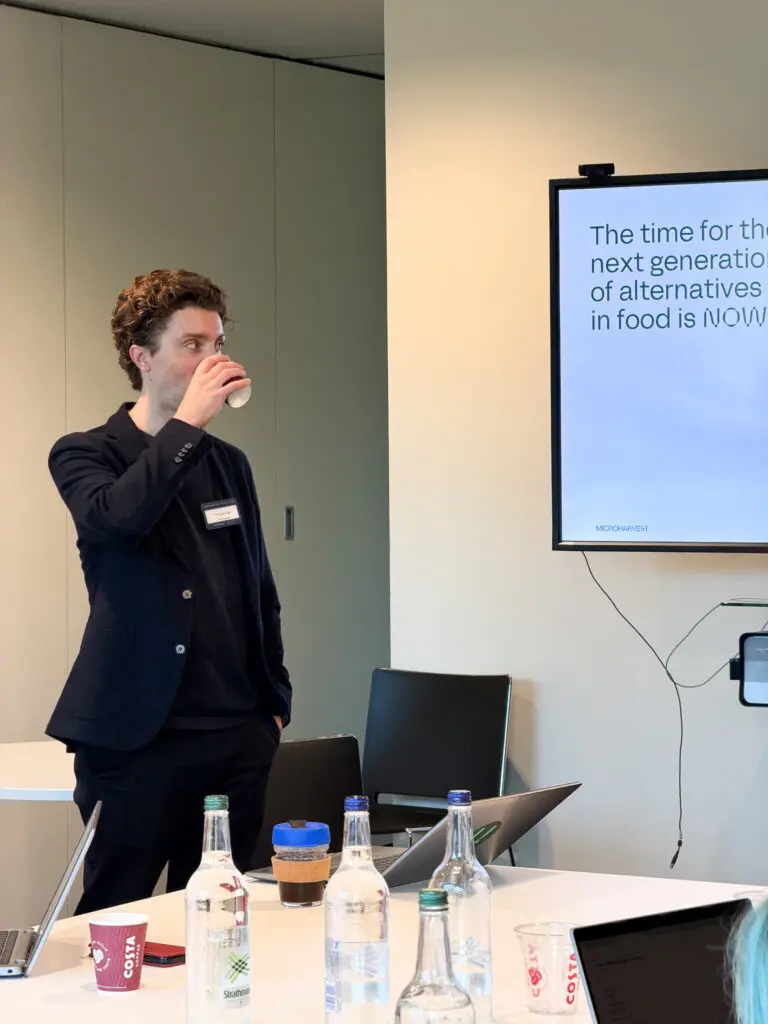
Rather than another pitch competition, the Sustainable Food Accelerator Bootcamp was designed to test how founders think, adapt and make decisions when their assumptions are challenged.
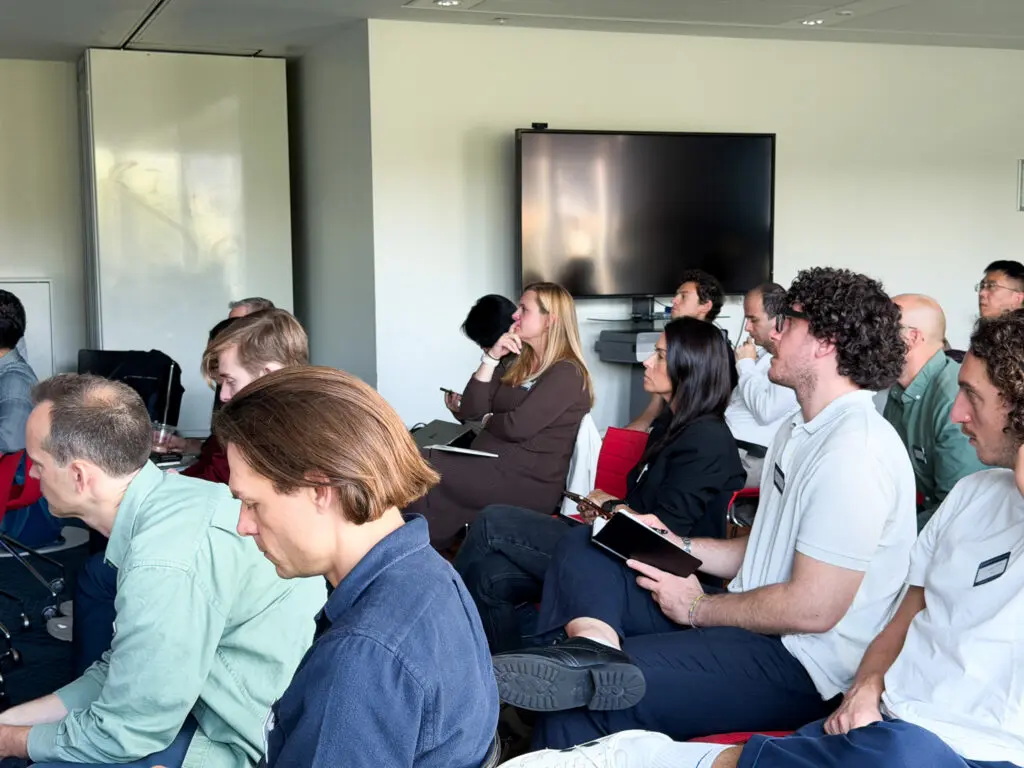
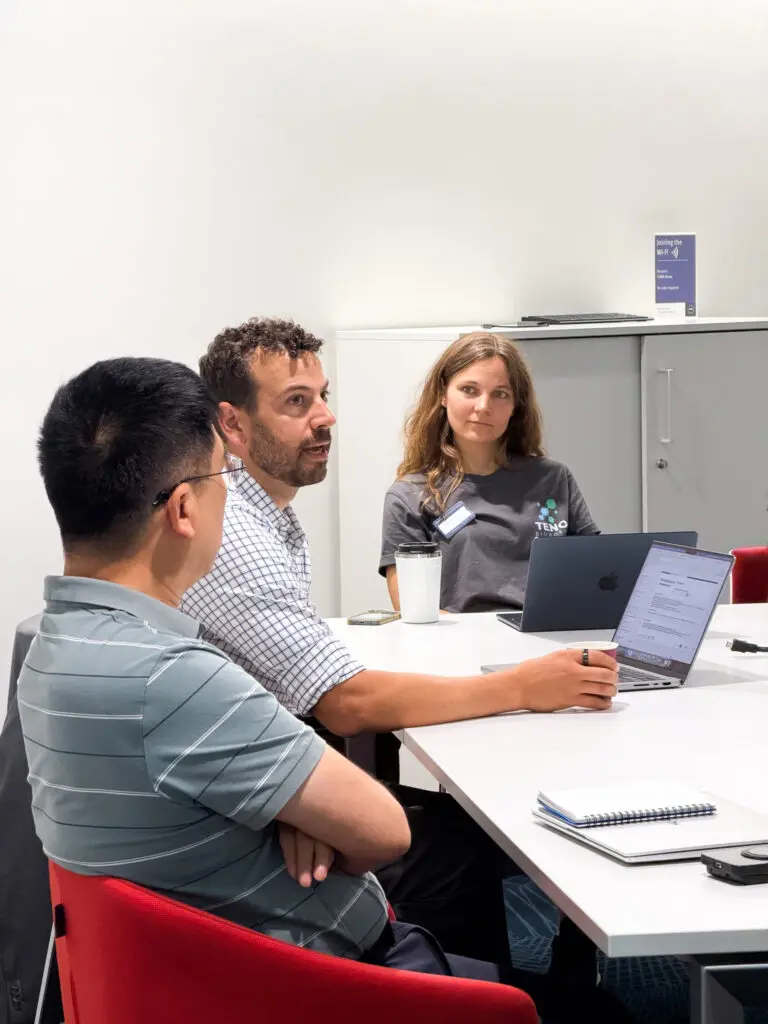
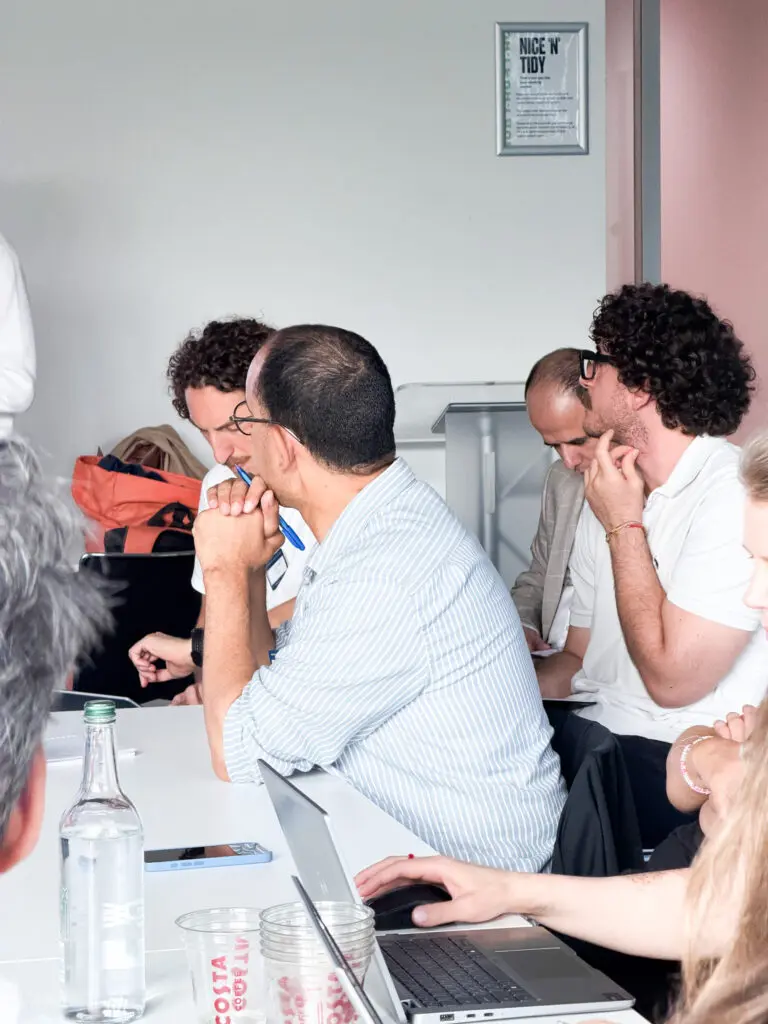
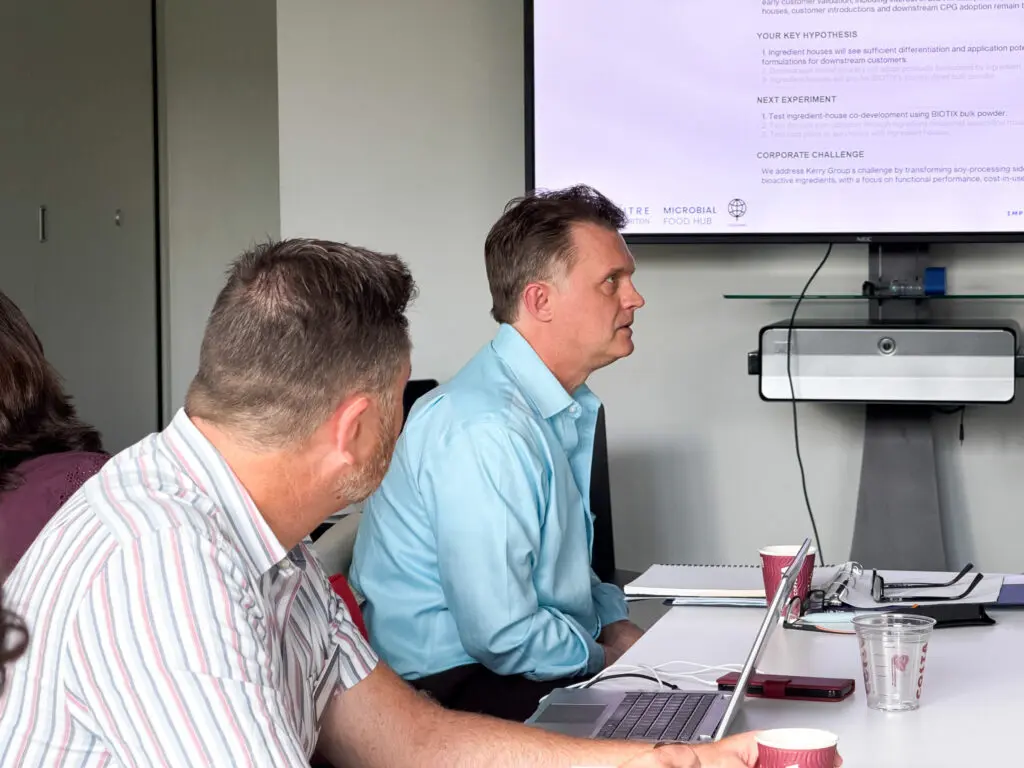
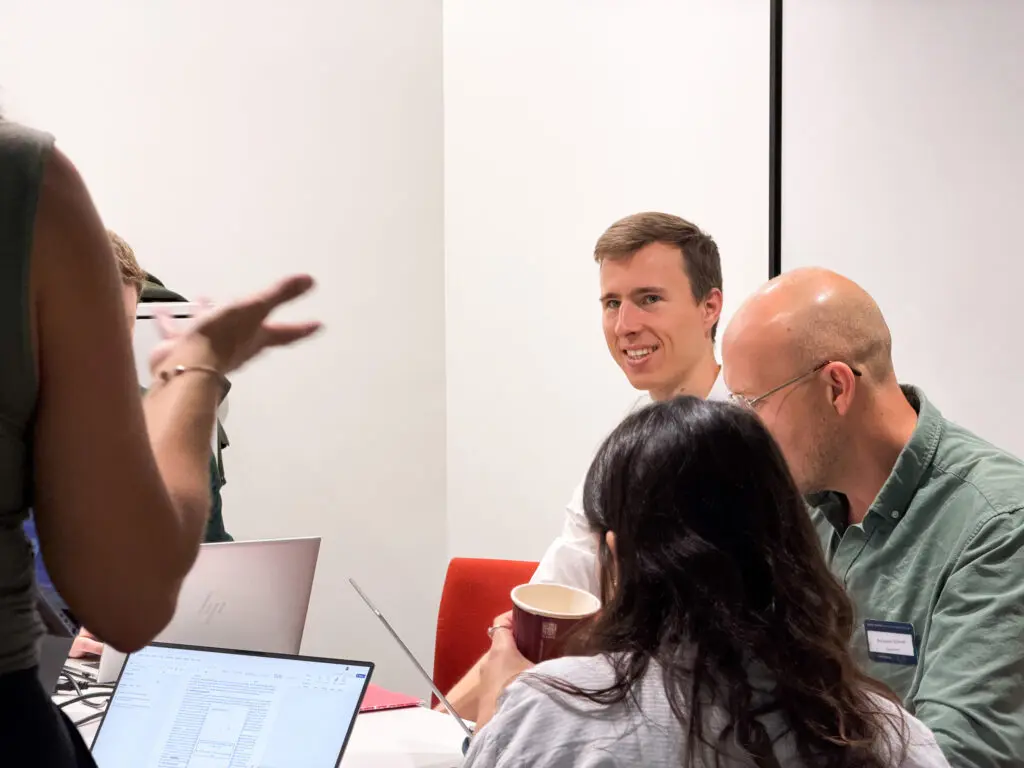
Across two intensive days, startups rotated through six expert-led stations covering customer and market validation, technology and product readiness, differentiation and defensibility, commercial strategy, founding team and fundraising.
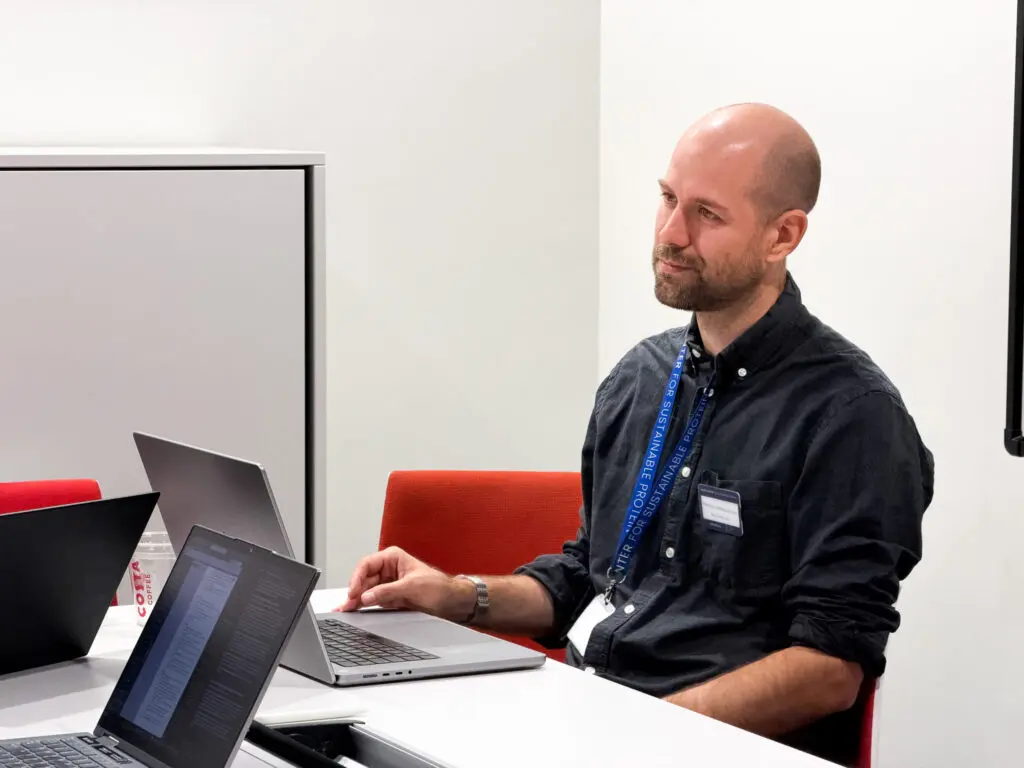
The sessions were structured as a Diagnostic Circuit, giving founders the opportunity to pressure-test their startup strategy with coaches and peers.
Discussions explored the questions that can determine whether an early-stage venture can move successfully towards market: Is there genuine product-market fit? What evidence does industry still need? Is the business model viable? What makes the technology defensible? What is the next experiment? And what needs to happen before a startup is ready for a corporate pilot or investment round?
“What stood out over the past two days was the energy of bringing together corporate partners, VCs and experts to support startups, while founders also challenged and learned from one another. That really captures the spirit of the Bezos Centre’s work in translation: building the capabilities and connections that help promising ventures scale and reach the market. A huge thank you to everyone who made it possible.”
Julia Espeso-Bischofberger, Venture Building and Commercialisation
Combining science with venture building
The accelerator brings together complementary strengths from across Imperial’s innovation ecosystem.
The Bezos Centre for Sustainable Protein and Microbial Food Hub contribute expertise across sustainable food research, translation, technical development and industry engagement, while Undaunted brings more than a decade of experience helping early-stage climate ventures develop, commercialise and scale.
A partnership between Imperial’s Grantham Institute and the Royal Institution, Undaunted has supported climate innovation since 2012, with its alumni companies raising more than $1.3 billion in investment, creating more than 1,600 jobs and maintaining an 88% survival rate.
Together, that creates a pathway designed not simply to identify exciting science, but to help founders turn it into companies capable of attracting customers, corporate partners and investment.
“One of the biggest challenges early-stage ventures face is genuinely understanding the needs of their future customers. Bootcamp saw an outstanding group of founders, developing high-potential solutions across the food value chain, engaging directly with corporate stakeholders to gain honest feedback on real industry challenges and test their ideas against real market needs. By combining Undaunted’s accelerator methodology with the Bezos Centre’s expertise, facilities and networks, we’re creating stronger opportunities for startups to collaborate with future customers, refine their solutions and build towards pilots and partnerships that can drive meaningful impact at scale. We’re creating a foundation from which startups can develop solutions alongside the organisations best placed to adopt them – and that feels very exciting.”
Maiko Schaffrath, Head of The Greenhouse accelerator at Undaunted
From startup potential to commercial readiness
The programme was created to tackle a recurring bottleneck in sustainable food innovation: strong science does not automatically translate into a scalable company.
Corporates need evidence before committing to pilots. Investors need confidence before backing scale-up. And founders need access to the right expertise, infrastructure, customers and capital to generate that proof.
At Bootcamp, coaches therefore assessed not only how advanced each startup was, but the quality of founders’ thinking, coachability and ability to recognise and respond to gaps in their business.
Selecting the first Sustainable Food Accelerator cohort
Following the Bootcamp, feedback and scorecards from across the six readiness areas will inform the selection of six startups for the first Sustainable Food Accelerator cohort, beginning in October.
“The strength of the startup pipeline has been exciting to see, both in the quality of the science and technology and in the ambition of the founders behind it. Through the Sustainable Food Accelerator, we want to help these ventures put their innovations to the test, build meaningful industry partnerships and turn promising research into commercially viable solutions that can make food production more sustainable.”
Professor Rodrigo Ledesma-Amaro, Director of Bezos Centre for Sustainable Protein and Microbial Food Hub
Selected ventures will then work with the Bezos Centre for Sustainable Protein, Microbial Food Hub and Undaunted, alongside investors, technical experts and the wider scale-up ecosystem.
The goal is to help founders leave the programme with more than a stronger pitch: with the evidence, resilience, commercial strategy, partnerships and market traction needed to build scalable businesses capable of delivering real-world impact.