









Backed by world-class funding and expertise to help ambitious founders scale faster.
Sustainable Food Accelerator
£0k
of equity-free funding available
£1000m
follow-on investment available
Pilot budget
committed by corporate partners
Imperial
#2
in the QS World University Rankings 2026
£0b+
raised by spinouts in the past five years
#1
for startup creation among very large European universities
Undaunted
0%
startup survival rate vs. 10% industry average
$0b+
undaunted alumni companies have gone on to raise over $1.3bn investment since 2012
0y
of proven impact
What we offer
Built for commercial viability
Founders begin with a defined corporate brief and graduate with data, validation and commercial proof required to secure pilots, attract investment and scale through the Bezos Centre’s global network.
£100k equity-free funding and access to up to £2M investment
Non-dilutive capital from day one, with access to equity-funding for future rounds.
End-to-end scale-up infrastructure
Access the facilities, expertise and technical support needed to progress from lab validation to commercial readiness.
Corporate pilots with committed budgets
Tackle real-world corporate challenges and pilot your technology with industry partners.
Regulatory & Grant Writing support
Stay ahead of evolving regulatory and policy requirements with expert guidance from our Policy and Regulatory Impact Unit, alongside bespoke grant writing support to secure non-dilutive funding.
Backed by leading foodtech VC investors
Build relationships with investors who know us and trust the programme, and engage through mentoring, office hours and fundraising support.
Technical translation and business integration
The Bezos Centre team combines scientific expertise, commercial insight, regulatory knowledge, scale-up experience and industry partnerships to accelerate your business growth across key areas.
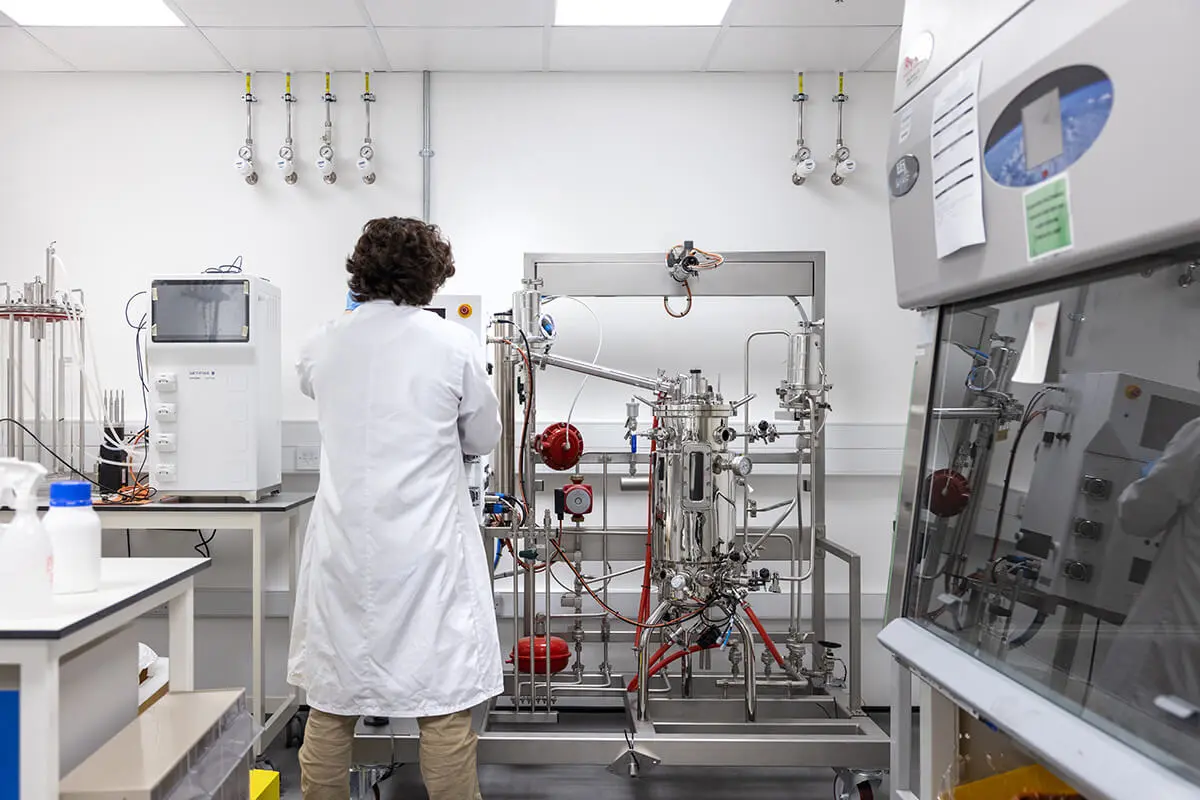
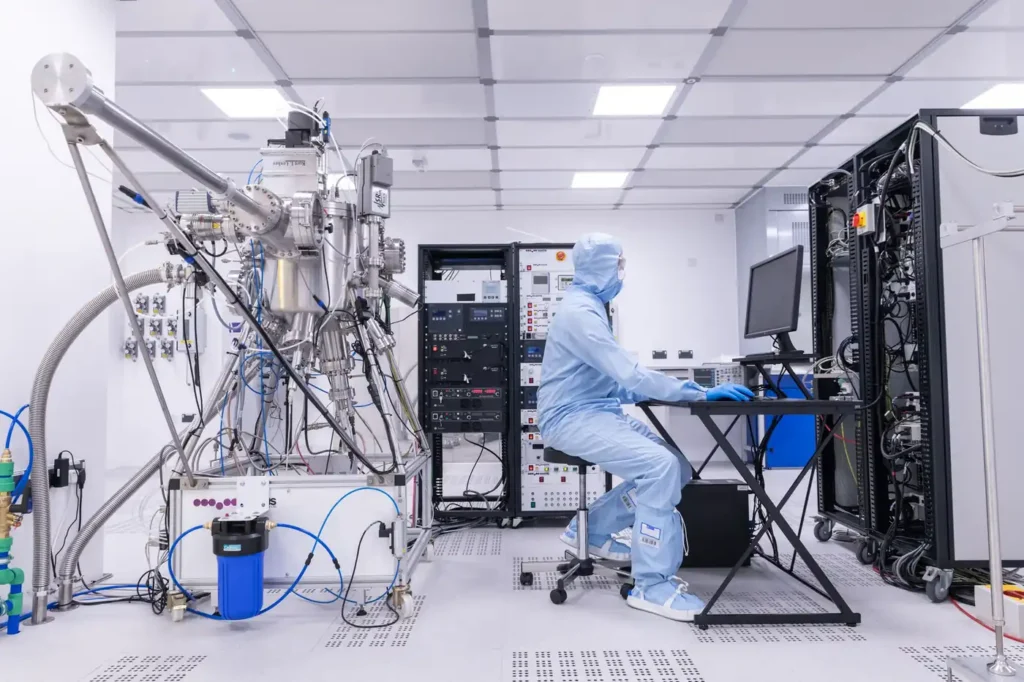
Offices and lab space for startups at the Imperial Incubator and the Bezos Centre for Sustainable Protein
From strain engineering to food product prototyping, start-ups can access facilities needed to move from lab to pilot-ready evidence.
MICROPLATE → 20L
Discovery and
Strain Engineering
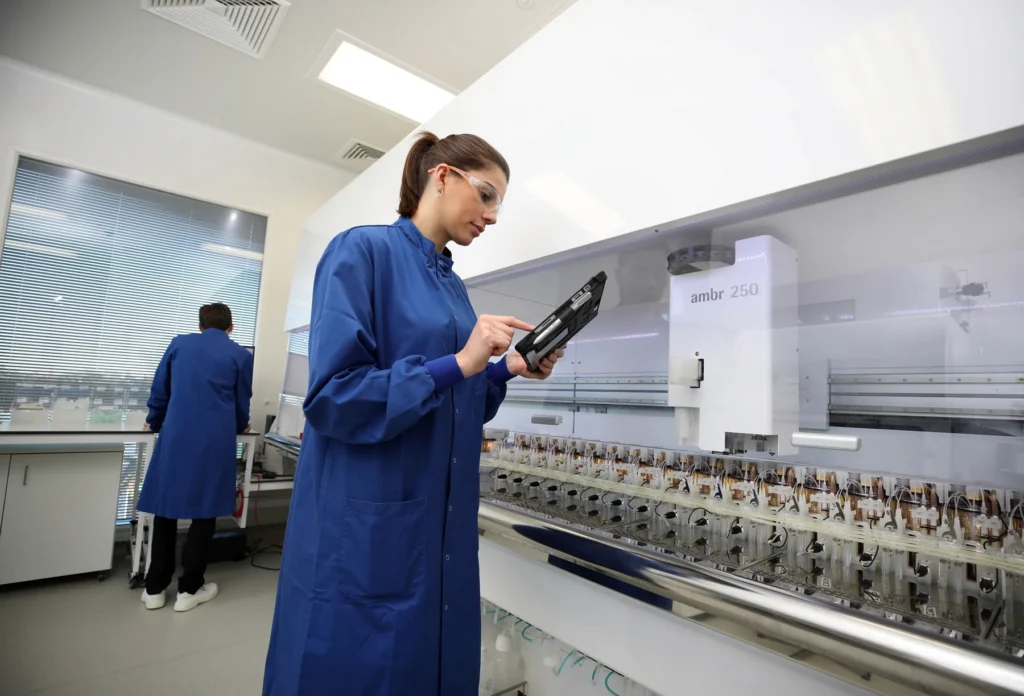
Imperial College London Strain engineering and fermentation from mL to 30L. Europe’s first FlowRACS single-cell sorter, a 24/7 autonomous experiment suite, and the UK’s only Periodic Table of Food multi-omics reference lab.
University of Cambridge Proteomics (LC-MS/MS) and anaerobic microbiology for microbial system characterisation and protein expression.
2ML → 20L
Process Development
and Bioprocessing
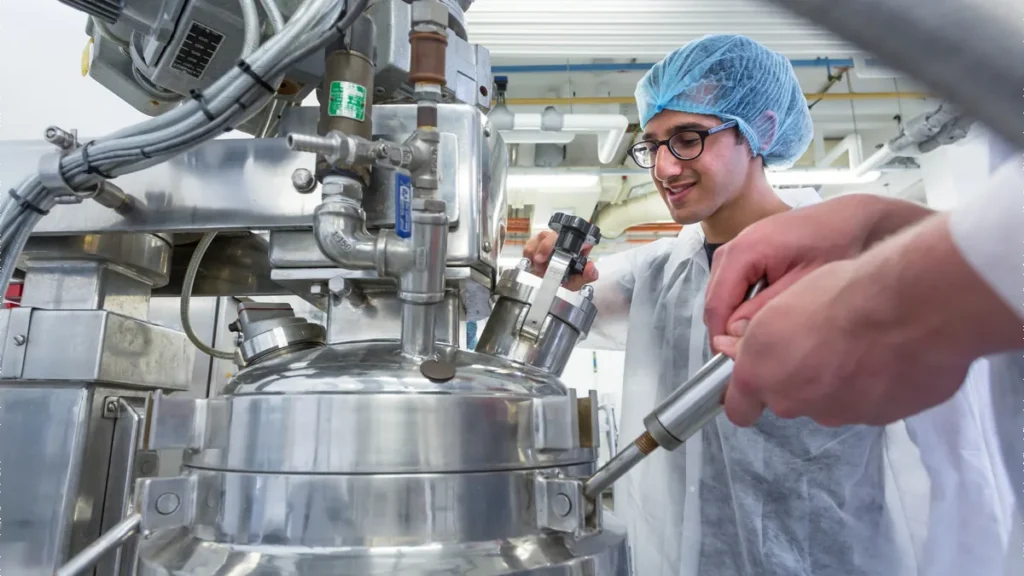
University College London End-to-end pilot bioprocessing from 2 mL to 100 L, with a full downstream processing suite: TFF, disc stack, homogenisers, chromatography, spray and freeze drying.
2L → 340L
Pilot Scale-Up and DSP
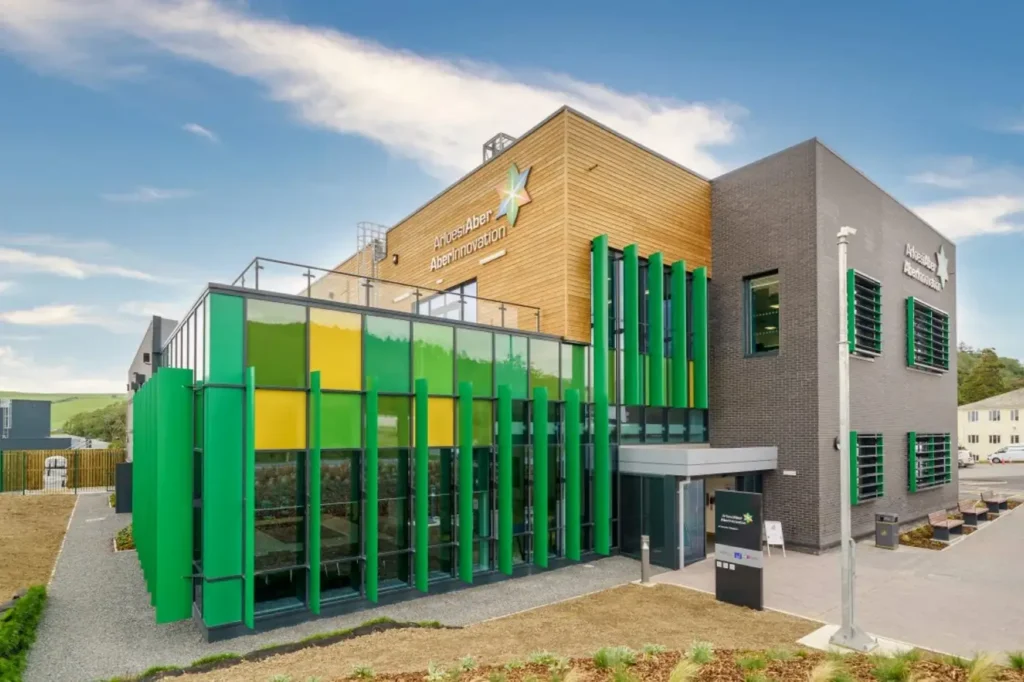
Aberystwyth University / AberInnovation / IBERS Farm-to-ingredient pipeline: industrial biomass pre-treatment, fermentation from 2 to 340 L, and downstream processing including membrane filtration, centrifugation and spray drying. Food-grade Future Food Centre with test kitchen and sensory suite.
MULTI-SCALE
Analytical Characterisation
Quadram Institute Structural and compositional analysis via advanced mass spectrometry (Waters Cyclic IMS/TOF), flow cytometry and Seahorse metabolic flux analysis.
University of Greenwich Application-focused tools including 2D GCxGC-TOF and electronic taste sensing (Insent TS-6000A).
PRODUCT SCALE
Food Application and
Product Prototype
University of Reading Food-grade pilot manufacturing: extrusion, UHT, dairy and bakery processing, 20 L bioreactor, and a dedicated Flavour and Sensory Centre for analytical and sensory analysis.
University of Greenwich Dry fractionation, twin-screw extrusion, high-pressure homogenisation, power ultrasound and 3D food printing.
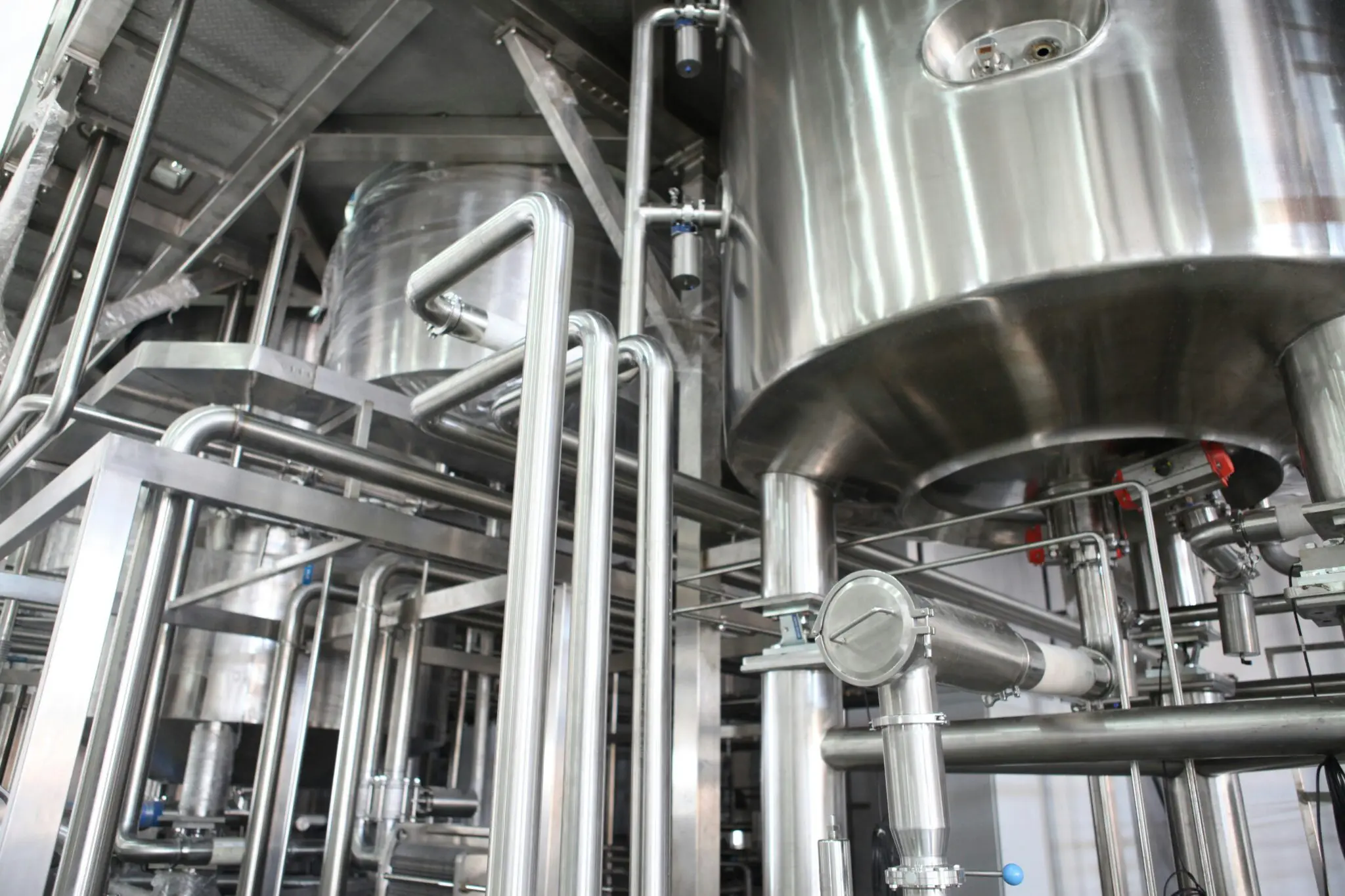
Pilot-to-demo scale fermentation
Connected to scale-up partners across the UK and Europe with GMP manufacturing suites, covering the full fermentation value chain: diverse feedstocks, host strains and downstream processing.
What are we looking for?
The challenges shaping the future of ingredients
Making sustainable ingredients cost-competitive at scale
Breakthroughs that improve production efficiency, reduce costs, and unlock competitiveness at industrial scale.
Winning ingredients built for taste, nutrition and performance
Solutions designed to meet real consumer expectations, delivering on flavour, texture, nutrition and functional performance.
Turning sidestreams into scalable food inputs
Technologies that transform waste streams and low-carbon feedstocks into high-value, sustainable ingredients for next-generation food systems.
De-risking scale-up from lab to industry
Infrastructure and capabilities that enable real-world validation, bridging the gap to manufacturing, and accelerating commercial readiness.
What does the acceleration process look like?
From application to Demo Day
13 July – 21 August
Call for Projects
Applications open.
Tell us what you are building, the problem you are solving and why it matters.
22 – 23 September
Selection Bootcamp
In-person selection days: expert interviews, deep-dive sessions and evaluation of the most promising teams.
October
Start of Programme
Selected start-ups enter the accelerator connecting directly to our infrastructure, partners and ecosystem.
Oct 2026 – Feb 2027
Foundation Programme: 7 x sprints on:
Customer & Market
Technology & Product
Commercial Model
Defensibility & Differentiation
Team & Resources
Climate Impact
Funding
Feb 2027 – Oct 2027
Monthly Sprint Programme
Commercial Sprints
Technology Sprints
Fundraising Sprints
October 2027
Demo day
The final showcase. Start-ups present to investors, corporates and ecosystem partners to unlock the next stage of growth.
Are you interested in joining us?
How to apply to our accelerator
programme
Eligibility Criteria
To apply, you should:
Be developing a technology in sustainable food with clear commercial potential.
Ideally have validated your technology to approximately TRL 3-4, with a clear plan for technical and commercial validation during the programme. Earlier or later-stage exceptional ventures with a strong fit are also encouraged to apply.
Be able to participate in key in-person programme activities at Imperial College London. Applications are welcome from founders worldwide. Successful applicants may be required to establish a UK legal entity during the programme, depending on the startup’s situation and programme requirements.
Be able to commit to the 12-month programme, including at least one day per week dedicated to coaching, workshops, and implementation.
Typically be pre-Series A, with limited institutional or commercial investment raised. We welcome applications from exceptional companies that may fall outside this profile if there is a strong strategic fit.
We actively encourage applications from women, people from minority ethnic backgrounds, disabled founders, and entrepreneurs from all backgrounds.
Application Form
Teams are assessed on their application form and pitch deck against the following criteria:
Food impact and relevance
Strength and uniqueness of innovation / IP
Potential to scale and likelihood of market success
Team capability
Overall suitability for the Sustainable Food Accelerator
Selection
Selection is based on the application form, Bootcamp participation, and outputs from the Bootcamp process. Offers are contingent on full engagement throughout the programme. In certain circumstances we may also conduct interviews as part of the process.
The selection panel comprises the Bezos Centre, Undaunted, and our Premium Partners.
The Bootcamp
The two-day Bootcamp takes place on 22–23 September. It is a hands-on process of coaching, peer review and presentations, designed to test critical business assumptions and give us a deeper view of each team than a traditional interview would.
Up to 6 startups will be selected following Bootcamp. We ask all applicants to save the date in case they are invited to attend.
Supported by
With collaboration from
About us
World-class research and venture support
Our partners are actively looking for technologies they can test, validate and scale. If you’re solving one of these, we want to hear from you.